What Does UPS Preventive Maintenance Include?
There is no single standard UPS preventive maintenance (PM) visit: the scope depends on the manufacturer and on the size and type of system. Most published scopes include a visual inspection of connections and subassemblies, capacitor and fan checks, input, output, and bypass measurements, transfer and battery tests, firmware and advisory review, and a written report. On modular systems, the capacitors and fans usually live inside the power modules. The right PM follows the manufacturer's procedures for your platform.
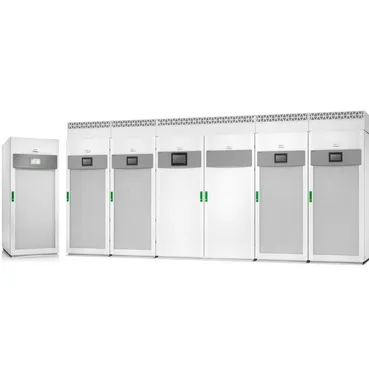
What We Provide
Related Solutions
UPS Maintenance Programs
We plan and perform PM in line with the manufacturer's recommendations for each platform in your fleet.
Learn moreBattery Testing and Replacement
We test VRLA and lithium-ion strings, trend the results, and replace batteries before they fail.
Learn moreModular UPS Platforms
We plan module-level service and life extension on modular systems such as the Eaton 93PM.
Learn moreCommon Elements
What Most UPS PM Visits Include
Manufacturers publish their own PM scopes, but most share a core set of tasks: a visual inspection of connections and subassemblies for signs of overheating or discoloration, capacitor inspection for leakage or swelling, fan and air filter checks, and an environmental check of temperature, airflow, and dust.
The visit also measures input, output, and bypass voltage and current, runs transfer and battery tests, reviews firmware and field bulletins or advisories, reviews the alarm and event log, inspects the battery cabinet, and ends with a written report.
Every major manufacturer checks capacitors and fans. What differs is how deep each check goes and which parts are replaced within the visit versus as separate work.
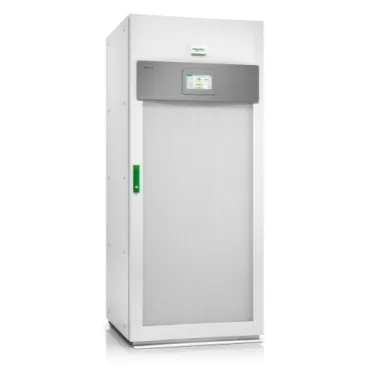
By Manufacturer
How PM Scope Differs Across Eaton, Schneider Electric, and Vertiv
Eaton's published PM scope includes DC and AC capacitor inspection, capacitance verification, protection settings, firmware and field service bulletins, meter calibration, a transfer test, outage simulation, filter replacement, and battery cell testing. Eaton recommends annual PM and plans DC capacitors, AC capacitors, and fans for replacement around year 10 on its larger three-phase units, with VRLA batteries every 3 to 5 years. Proactive replacement of batteries, capacitors, and fans is a separate life-extension service, not part of the PM.
Schneider Electric's three-phase PM scope centers on non-invasive inspection and cleaning, environmental checks, termination inspection, functional verification (voltages, battery self-test, transfer, and parallel operation), field advisories and firmware, and a site report. Batteries, capacitors, and fans are treated as wear parts outside the PM. On Symmetra PX systems, power modules reach end of life at about 10 years and are replaced as whole modules.
Vertiv recommends two PM visits per year for Liebert UPS systems and publishes fan replacement at about 5 to 6 years and AC and DC capacitor replacement at about 6 or 12 to 15 years, depending on the equipment. Its single-phase PM scope is shorter: voltages, a thermal check of breakers and connections, visual inspection, torque, cleaning, alarms, a transfer and battery discharge test, battery float voltage and ripple, and terminal torque.
System Type and Size
Modular, Monolithic, and Small Single-Phase Units
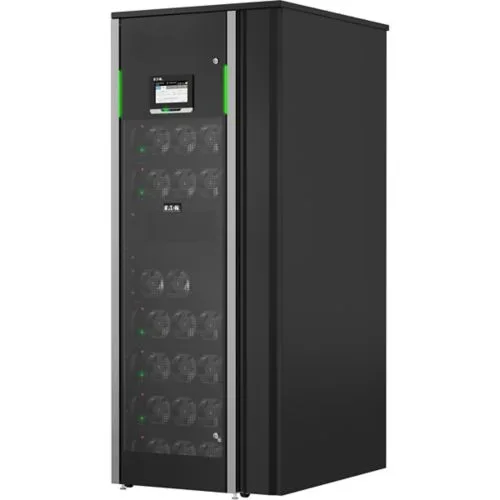
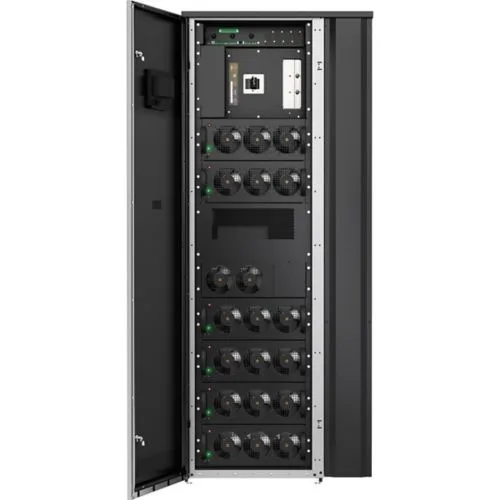
On modular UPS systems such as the Eaton 93PM, Schneider Electric Symmetra PX, and Vertiv Liebert APM and EXM, capacitors and fans typically live inside the swappable power modules. End-of-life service then often means replacing the module rather than individual components, which changes how PM and life-extension work are planned.
Size matters too. Small single-phase units often use user-replaceable battery cartridges with a 3 to 5 year life, and in practice they are often replaced rather than maintained. Three-phase and larger systems get scheduled PM, with scope growing with system size and redundancy.
Batteries and Frequency
Battery Testing and How Often to Schedule PM
Batteries need their own attention. IEEE 1188 (VRLA) and IEEE 450 (flooded) call for regular inspections, ohmic (impedance or conductance) trending on VRLA batteries quarterly to semiannually, and periodic capacity testing. Batteries should be replaced when capacity drops below 80% of rated, and a passing self-test does not prove runtime.
PM frequency runs from annual to semiannual depending on the manufacturer and how critical the load is. NFPA 70B (2023 edition) makes a documented, condition-based electrical maintenance program the expectation. Comp-Utility plans and performs PM in line with the manufacturer's recommendations for your platform.
Key Specifications
| Manufacturer | Recommended PM Frequency | Wear Parts and Published Replacement Timing |
|---|---|---|
| Eaton | Annual | DC capacitors, AC capacitors, and fans around year 10 on larger three-phase units; VRLA batteries every 3 to 5 years; replacement is a separate life-extension service |
| Schneider Electric (APC) | Per the service plan for your model | Batteries, capacitors, and fans treated as wear parts outside the PM; Symmetra PX power modules replaced as whole modules at about 10 years |
| Vertiv (Liebert) | Two visits per year | Fans at about 5 to 6 years; AC and DC capacitors at about 6 or 12 to 15 years, depending on the equipment |
Summarized from manufacturers' published service documents. Scope, intervals, and replacement timing vary by model, age, and operating conditions; confirm the current manufacturer guidance for your specific unit.
The Comp-Utility Difference
Why Comp-Utility?
Long-Standing Distribution Partner
As a long-standing distribution partner of Eaton, Schneider Electric, and Vertiv, we specify best-in-class systems and back them with factory-grade service.
Engineer-Owned and Operated
Comp-Utility is owned and operated by engineers, with licensed Texas Professional Engineers (P.E.) on staff. That rigor anchors every design, specification, and installation.
24/7 Emergency Response and Preventative Maintenance
Our technicians provide preventative maintenance programs and 24/7 emergency response, with rapid on-site dispatch across Central Texas when facilities need us most.
Trusted Since 1992
We have designed, installed, and maintained mission-critical power and cooling infrastructure across Central Texas since 1992, through every generation of the technology.
Related Resources
- UPS Maintenance and Battery Replacement in Central Texas
- UPS Battery Testing and Replacement Services
- Signs Your UPS Batteries Need Replacement
- Modular vs Monolithic UPS: Pros and Cons
- Eaton 93PM Modular UPS: Specs, Sizing, and Service
- Lithium-Ion vs VRLA UPS Batteries
- NFPA 70B Electrical Maintenance Requirements Explained
- See our main service page
Licensed, Certified & Recognized
We hold ourselves to the standards of the institutions we serve, from professional licensure and jobsite safety to the industry organizations that set the bar for mission-critical work.

Licensed Professional Engineers
State of Texas (TBPE)
OSHA 30 Certified
Field Technicians

AFCOM Member
Data center industry association

7x24 Exchange Member
Mission-critical infrastructure
Frequently Asked Questions
What does UPS preventive maintenance include?
It depends on the manufacturer and the system, but most published scopes include a visual inspection of connections and subassemblies, capacitor inspection for leakage or swelling, fan and air filter checks, an environmental check, input, output, and bypass measurements, transfer and battery tests, firmware and advisory review, an alarm and event log review, a battery cabinet inspection, and a written report.
Is there a standard UPS PM checklist?
No single checklist applies to every UPS. Each manufacturer publishes its own PM scope, and it varies with the model and the size and type of system. Every major manufacturer checks capacitors and fans, but how deep the checks go and which parts are replaced differ. The right PM follows the manufacturer's procedures for your specific platform.
How often should a UPS get preventive maintenance?
Most UPS systems receive PM annually to semiannually, depending on the manufacturer and how critical the load is. Eaton recommends annual PM, and Vertiv recommends two visits per year. NFPA 70B (2023 edition) makes a documented, condition-based maintenance program the expectation, so frequency should reflect equipment condition, age, and criticality as well as the manufacturer's schedule.
Are capacitors, fans, and batteries replaced during a PM visit?
Usually not. PM inspects and tests these parts, but replacement is typically separate work. Eaton treats proactive replacement of batteries, capacitors, and fans as a life-extension service outside the PM, and Schneider Electric treats them as wear parts outside the PM. Ask what is included and what is quoted separately, including capacitors, fans, batteries, and load bank testing.
When do UPS capacitors and fans need replacement?
It depends on the manufacturer and the equipment. Eaton plans DC capacitors, AC capacitors, and fans for replacement around year 10 on its larger three-phase units. Vertiv publishes fan replacement at about 5 to 6 years and AC and DC capacitor replacement at about 6 or 12 to 15 years, depending on the equipment. Follow the published schedule for your model.
How is preventive maintenance different on a modular UPS?
On modular systems such as the Eaton 93PM, Schneider Electric Symmetra PX, and Vertiv Liebert APM and EXM, capacitors and fans typically sit inside the swappable power modules. End-of-life service often means replacing the whole module rather than individual parts. On Symmetra PX, for example, power modules reach end of life at about 10 years and are replaced as modules.
Do small single-phase UPS units need preventive maintenance?
Small single-phase units often use user-replaceable battery cartridges with a 3 to 5 year life, and in practice they are often replaced rather than maintained. Some manufacturers publish a shorter single-phase PM scope: Vertiv's covers voltages, thermal checks of breakers and connections, visual inspection, torque, cleaning, alarms, a transfer and battery discharge test, and battery float voltage and ripple.
Does a passing UPS battery self-test mean the batteries are good?
No. A passing self-test does not prove runtime. IEEE 1188 for VRLA and IEEE 450 for flooded batteries call for regular inspections, ohmic (impedance or conductance) trending on VRLA quarterly to semiannually, and periodic capacity testing. Batteries should be replaced when capacity drops below 80% of rated, which a capacity test confirms.
What should I ask for in a UPS PM proposal?
Ask for the manufacturer's PM scope for your exact model, a clear list of what is included and what is separate (capacitors, fans, batteries, and load bank testing), the visit frequency, and a sample written report. Comp-Utility plans and performs PM in line with manufacturer recommendations. Call (512) 346-0999 or email sales@comp-utility.com to review your UPS fleet.
My UPS is in alarm, what do I do?
Call Comp-Utility right away at (512) 346-0999, and have the unit's model and serial number ready along with any alarm codes or messages shown on the UPS display. A unit in alarm can indicate a battery, load, or power-path issue that needs prompt attention. Because we maintain a large base of units under contract with the major UPS manufacturers, we can escalate directly to the right factory resources and coordinate service faster and more directly than a single end user calling general support, often getting you answers and a technician on site sooner.