How to Size a UPS for Your Data Center or Server Room
Sizing a UPS starts with totaling your critical load in watts and VA, then accounting for power factor, redundancy target (such as N+1), required battery runtime, and future growth. The UPS must cover the load with the chosen redundancy, and the battery must bridge to a generator or restored utility power. Right-sizing avoids both an overloaded UPS and an expensive, underused one.
What We Provide
Related Solutions
Load Assessment
We measure or calculate your real critical load in watts and VA, including power factor, rather than relying on nameplate sums.
Learn moreRuntime and Redundancy
We size battery runtime to bridge to your generator and design the redundancy your uptime target requires.
Learn moreRight Platform Selection
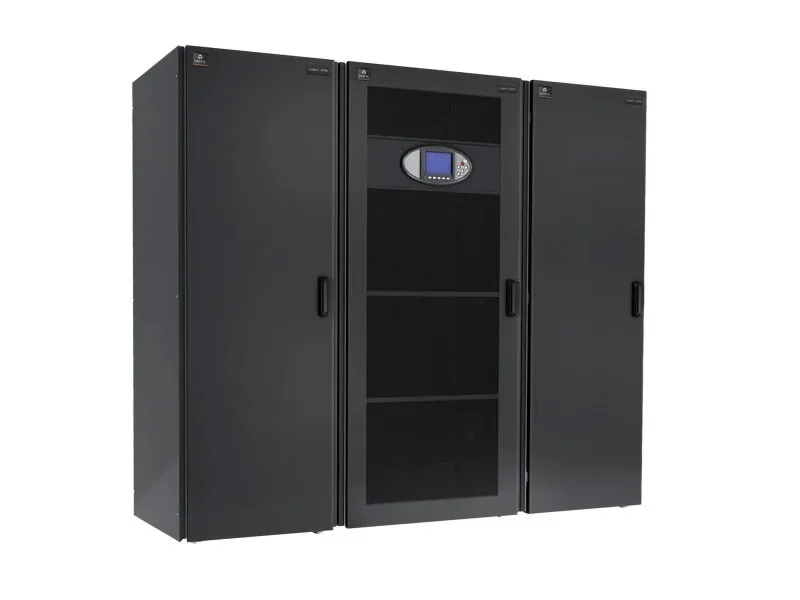
We match the sized load to the right UPS platform, modular or monolithic, single or three-phase.
Learn moreGet It Right the First Time
Engineer-Led Sizing for Today and Tomorrow
Undersizing risks overload and dropped loads; oversizing wastes capital and runs the UPS inefficiently at low load. The right approach measures the actual load, applies the correct power factor, and plans headroom for realistic growth.
Comp-Utility's engineers size the UPS and battery and recommend a platform that fits today's load and scales with your facility.
The Comp-Utility Difference
Why Comp-Utility?
Engineer-Owned and Operated
Comp-Utility is owned and operated by engineers, with licensed Texas Professional Engineers (P.E.) on staff. That rigor anchors every design, specification, and installation.
Long-Standing Distribution Partner
As a long-standing distribution partner of Eaton, Schneider Electric, and Vertiv, we specify best-in-class systems and back them with factory-grade service.
Trusted Since 1992
We have designed, installed, and maintained mission-critical power and cooling infrastructure across Central Texas since 1992, through every generation of the technology.
Turnkey, Single-Contract Partner
We sell, design, install, and maintain complete infrastructure end to end. One accountable team and one contract for power, cooling, distribution, and cabling.
Licensed, Certified & Recognized
We hold ourselves to the standards of the institutions we serve, from professional licensure and jobsite safety to the industry organizations that set the bar for mission-critical work.

Licensed Professional Engineers
State of Texas (TBPE)
OSHA 30 Certified
Field Technicians

AFCOM Member
Data center industry association

7x24 Exchange Member
Mission-critical infrastructure
Frequently Asked Questions
How do I calculate the load for a UPS?
Total the power draw of the equipment the UPS must protect, in watts (real power) and VA (apparent power), accounting for power factor. Nameplate ratings overstate actual draw, so measured or carefully estimated loads are more accurate. Add margin for inrush and growth. Comp-Utility measures or models the real load rather than summing nameplates.
What is the difference between watts and VA in UPS sizing?
Watts measure real power consumed, while VA (volt-amperes) measure apparent power, which includes reactive power. The ratio between them is the power factor. A UPS has both a watt and a VA rating, and your load must stay within both. Modern UPS systems with unity power factor can deliver their full VA rating as watts.
How do I determine the right battery runtime?
Battery runtime should bridge the gap until backup generation starts and stabilizes, or until you can safely shut down if there is no generator. For generator-backed sites, a few minutes is often enough; without a generator, longer runtime is needed. Comp-Utility sizes the battery to your specific bridge-to-generator or shutdown requirement.
Should I size for future growth?
Yes. Sizing only for today's load can force a costly replacement when you grow. Planning realistic headroom, or choosing a modular UPS that scales with added modules, lets capacity track demand. Comp-Utility balances today's efficiency (UPS run too lightly is inefficient) against tomorrow's growth when recommending a size and platform.
How does redundancy affect UPS sizing?
Redundancy adds capacity beyond the load: N+1 requires one extra unit or module, and 2N requires a second full system. So the total installed capacity is larger than the raw load. Comp-Utility incorporates your redundancy target into the sizing so the system meets both the load and the availability requirement.
What happens if a UPS is undersized or oversized?
An undersized UPS can overload, drop the load, or have insufficient runtime. An oversized UPS wastes capital and may run inefficiently at very low load, though modern units handle light loads better than older ones. Proper sizing avoids both, which is why an engineer-led load assessment is worthwhile.
Do I need a single-phase or three-phase UPS?
Smaller loads in server rooms and edge sites are typically served by single-phase UPS systems, while data centers and larger facilities use three-phase systems. The crossover depends on capacity and your electrical service. Comp-Utility determines the right phase and voltage as part of sizing and integrates the UPS into your electrical design.
Who can size a UPS for my facility in Central Texas?
Comp-Utility's licensed Texas Professional Engineers size UPS systems for facilities across Central Texas, measuring the real load, applying redundancy and runtime requirements, and recommending the right platform from Eaton, Schneider Electric, or Vertiv. Call (512) 346-0999 or email sales@comp-utility.com for an engineer-led sizing.
My UPS is in alarm, what do I do?
Call Comp-Utility right away at (512) 346-0999, and have the unit's model and serial number ready along with any alarm codes or messages shown on the UPS display. A unit in alarm can indicate a battery, load, or power-path issue that needs prompt attention. Because we maintain a large base of units under contract with the major UPS manufacturers, we can escalate directly to the right factory resources and coordinate service faster and more directly than a single end user calling general support, often getting you answers and a technician on site sooner.