UPS Redundancy Explained: N+1 vs 2N vs 2N+1
Redundancy notation describes how much spare capacity protects a critical load. N is exactly the capacity required, N+1 adds one extra unit or module so the system survives a single failure, 2N provides two fully independent systems, and 2N+1 adds a spare to each side. Higher redundancy increases availability and cost, and the right level depends on your data center tier goal and tolerance for downtime.
What We Provide
Related Solutions
Redundancy Design
We design N+1, 2N, or 2N+1 power architectures aligned to your Uptime Institute tier and uptime targets.
Learn moreModular Redundancy
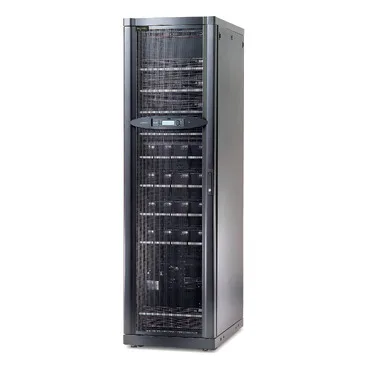
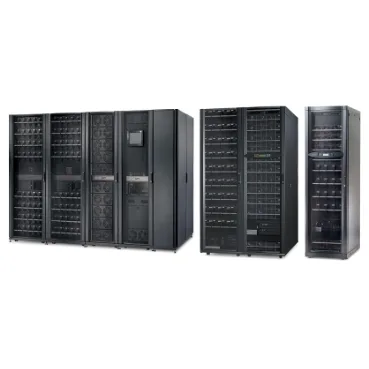
Modular UPS systems deliver cost-effective internal N+1 and can parallel to 2N for the highest availability.
Learn moreCommissioning Verification
We prove redundancy works through integrated systems testing before the design carries live load.
Learn moreAvailability vs Cost
Buy the Redundancy Your Uptime Goal Requires
Each step up in redundancy improves availability and concurrent maintainability but increases capital and operating cost. The aim is to match redundancy to the business cost of downtime and your target data center tier.
Comp-Utility's engineers translate your uptime goal into a concrete N+1, 2N, or 2N+1 power design and verify it through commissioning.
The Comp-Utility Difference
Why Comp-Utility?
Engineer-Owned and Operated
Comp-Utility is owned and operated by engineers, with licensed Texas Professional Engineers (P.E.) on staff. That rigor anchors every design, specification, and installation.
Turnkey, Single-Contract Partner
We sell, design, install, and maintain complete infrastructure end to end. One accountable team and one contract for power, cooling, distribution, and cabling.
Trusted Since 1992
We have designed, installed, and maintained mission-critical power and cooling infrastructure across Central Texas since 1992, through every generation of the technology.
Long-Standing Distribution Partner
As a long-standing distribution partner of Eaton, Schneider Electric, and Vertiv, we specify best-in-class systems and back them with factory-grade service.
Licensed, Certified & Recognized
We hold ourselves to the standards of the institutions we serve, from professional licensure and jobsite safety to the industry organizations that set the bar for mission-critical work.

Licensed Professional Engineers
State of Texas (TBPE)
OSHA 30 Certified
Field Technicians

AFCOM Member
Data center industry association

7x24 Exchange Member
Mission-critical infrastructure
Frequently Asked Questions
What does N mean in UPS redundancy?
N represents the exact capacity required to support the critical load with no spare. An N system has no redundancy: if any UPS module or unit fails or must be serviced, capacity is lost and the load is at risk. N is the baseline against which redundancy levels like N+1 and 2N are defined.
What is N+1 redundancy?
N+1 means the system has the required capacity (N) plus one additional unit or module, so it can lose or service one component without dropping the load. N+1 is a common, cost-effective redundancy level that protects against a single failure and allows concurrent maintenance of one element, supporting higher availability than a bare N system.
What is 2N redundancy?
2N means two complete, independent systems, each able to carry the full load on its own. If one entire system fails or is taken down for maintenance, the other carries the load with no interruption. 2N provides very high availability and full concurrent maintainability but roughly doubles the infrastructure and cost.
What is 2N+1?
2N+1 builds on 2N by adding an extra unit to the redundant architecture, providing fault tolerance even during maintenance of one path. It is used in the most demanding, fault-tolerant facilities where the cost of downtime is extreme. It offers the highest availability of these common configurations, at the highest cost.
Which redundancy level do I need?
It depends on your tolerance for downtime and your target data center tier. Many enterprise data centers use N+1, while Tier III and IV facilities use 2N or 2N+1 for concurrent maintainability and fault tolerance. Comp-Utility helps weigh the business cost of downtime against infrastructure cost to select the right level.
How does redundancy relate to data center tiers?
Uptime Institute tiers correspond loosely to redundancy and maintainability: higher tiers require redundant components and paths so maintenance and faults do not cause downtime. For example, Tier III emphasizes concurrent maintainability, often achieved with N+1 or 2N designs. Comp-Utility designs power redundancy to align with your target tier.
Can modular UPS systems achieve these redundancy levels?
Yes. Modular UPS systems achieve N+1 internally by adding a module beyond the load, and multiple frames can be paralleled to reach 2N or 2N+1. This makes modular architectures a cost-effective way to build redundancy incrementally. Comp-Utility designs the module and paralleling scheme to meet your availability goal.
Who can design and verify my redundant power system?
Comp-Utility's licensed Texas Professional Engineers design N+1, 2N, and 2N+1 power architectures and verify them through integrated systems testing during commissioning, across Central Texas. We ensure the redundancy works under real failure scenarios before go-live. Call (512) 346-0999 or email sales@comp-utility.com.
My UPS is in alarm, what do I do?
Call Comp-Utility right away at (512) 346-0999, and have the unit's model and serial number ready along with any alarm codes or messages shown on the UPS display. A unit in alarm can indicate a battery, load, or power-path issue that needs prompt attention. Because we maintain a large base of units under contract with the major UPS manufacturers, we can escalate directly to the right factory resources and coordinate service faster and more directly than a single end user calling general support, often getting you answers and a technician on site sooner.