Precision Cooling Types: CRAC, CRAH, In-Row, Rear-Door, and Liquid
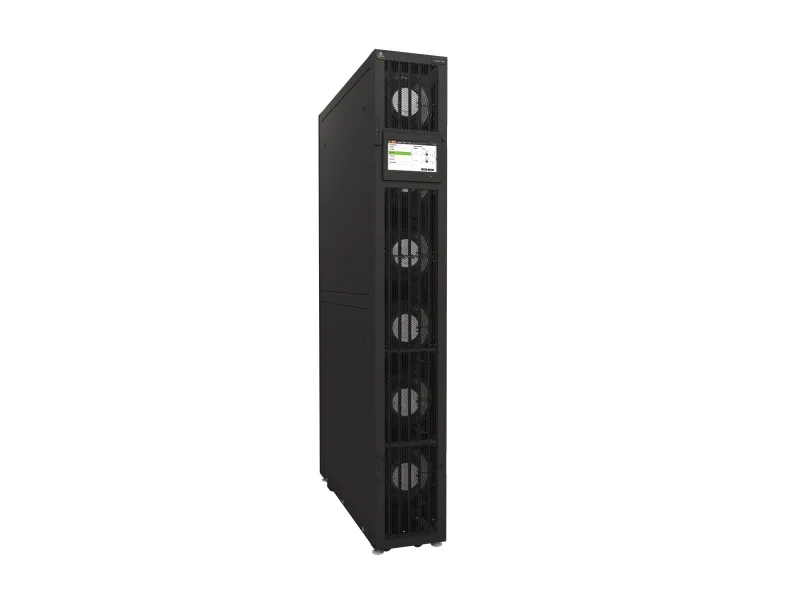
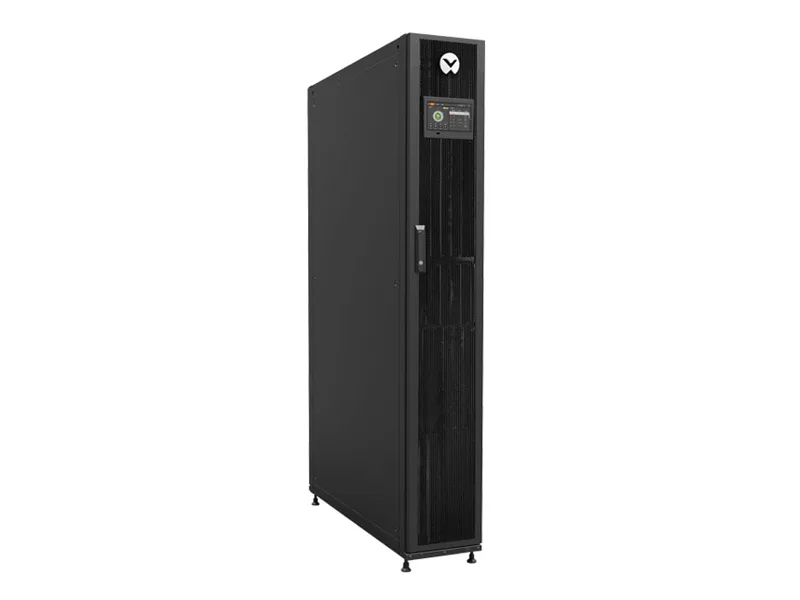
Data centers use several precision cooling approaches. CRAC units use refrigerant-based direct expansion, CRAH units use chilled water, both at the room perimeter. In-row cooling places capacity between racks for higher density, rear-door heat exchangers remove heat at the cabinet, and liquid cooling (direct-to-chip or immersion) handles the highest-density AI and HPC loads. The right type depends on rack density, scale, and whether you have a chilled-water plant.
What We Provide
Related Solutions
Cooling Selection and Design
We match CRAC, CRAH, in-row, rear-door, or liquid cooling to your density, scale, and infrastructure.
Learn moreHigh-Density and AI Cooling
We design in-row, rear-door, and liquid cooling for the dense racks driven by AI and HPC.
Learn moreService and Maintenance
We maintain all of these cooling types across major brands with 24/7 response.
Learn moreDensity Drives the Choice
From Perimeter Air to Direct-to-Chip Liquid
Low to moderate densities are well served by perimeter CRAC or CRAH units, often with containment. As density rises, in-row and rear-door cooling bring capacity closer to the heat, and the densest AI and HPC racks increasingly require liquid cooling.
Comp-Utility designs the right mix for your densities and plans the transition as they grow.
The Comp-Utility Difference
Why Comp-Utility?
Engineer-Owned and Operated
Comp-Utility is owned and operated by engineers, with licensed Texas Professional Engineers (P.E.) on staff. That rigor anchors every design, specification, and installation.
Long-Standing Distribution Partner
As a long-standing distribution partner of Eaton, Schneider Electric, and Vertiv, we specify best-in-class systems and back them with factory-grade service.
Trusted Since 1992
We have designed, installed, and maintained mission-critical power and cooling infrastructure across Central Texas since 1992, through every generation of the technology.
Turnkey, Single-Contract Partner
We sell, design, install, and maintain complete infrastructure end to end. One accountable team and one contract for power, cooling, distribution, and cabling.
Licensed, Certified & Recognized
We hold ourselves to the standards of the institutions we serve, from professional licensure and jobsite safety to the industry organizations that set the bar for mission-critical work.

Licensed Professional Engineers
State of Texas (TBPE)
OSHA 30 Certified
Field Technicians

AFCOM Member
Data center industry association

7x24 Exchange Member
Mission-critical infrastructure
Frequently Asked Questions
What is the difference between CRAC and CRAH units?
A CRAC (computer room air conditioner) uses a refrigerant-based direct-expansion system with a compressor in the unit, while a CRAH (computer room air handler) uses chilled water from a central plant. CRAHs are common in larger facilities with a chilled-water loop and are often more efficient at scale, while CRACs suit smaller or standalone spaces without chilled water.
What is in-row cooling and when should I use it?
In-row cooling places cooling units between racks, close to the heat source, which is more efficient than perimeter cooling for higher-density rows. It is used when rack densities exceed what perimeter units can effectively cool, and it pairs well with hot-aisle or cold-aisle containment. Comp-Utility deploys in-row cooling for dense rows and edge deployments.
What are rear-door heat exchangers?
Rear-door heat exchangers mount on the back of a cabinet and remove heat as air exits the servers, using chilled or pumped water through a fanless or fan-assisted coil. They handle high rack heat where hot-aisle and cold-aisle air management is impractical or insufficient, and are a common step toward liquid cooling for high-density racks.
What is liquid cooling for data centers?
Liquid cooling brings a coolant much closer to or into contact with the heat source. Direct-to-chip cooling circulates coolant through cold plates on processors, while immersion cooling submerges hardware in a dielectric fluid. Liquid cooling handles the extreme densities of AI and HPC racks that air cooling cannot, often using coolant distribution units (CDUs).
Which cooling type is most efficient?
Efficiency depends on density and design. Chilled-water systems with economization are efficient at large scale, in-row and rear-door cooling improve efficiency at higher densities by shortening the air path, and liquid cooling is the most efficient for very high-density loads. Comp-Utility designs the approach that maximizes efficiency for your specific densities and climate.
Can I mix cooling types in one data center?
Yes, and it is increasingly common. A facility might use perimeter CRAH units for general load, in-row or rear-door cooling for high-density rows, and direct-to-chip liquid cooling for AI clusters. Comp-Utility designs an integrated cooling strategy that applies the right type to each part of the floor.
How do I know which cooling type my facility needs?
The main drivers are rack density (kW per rack), total scale, whether you have a chilled-water plant, and growth plans, especially toward AI and HPC. Lower densities suit perimeter air; higher densities push toward in-row, rear-door, and liquid. Comp-Utility assesses your densities and infrastructure and recommends the right cooling design.
Who designs and services precision cooling in Central Texas?
Comp-Utility designs, installs, and services CRAC, CRAH, in-row, rear-door, and liquid cooling across Central Texas, as a distribution partner of Vertiv and Schneider Electric and a vendor-agnostic service provider, with 24/7 response. Call (512) 346-0999 or email sales@comp-utility.com.