Air vs Liquid Cooling for AI and GPU Data Centers
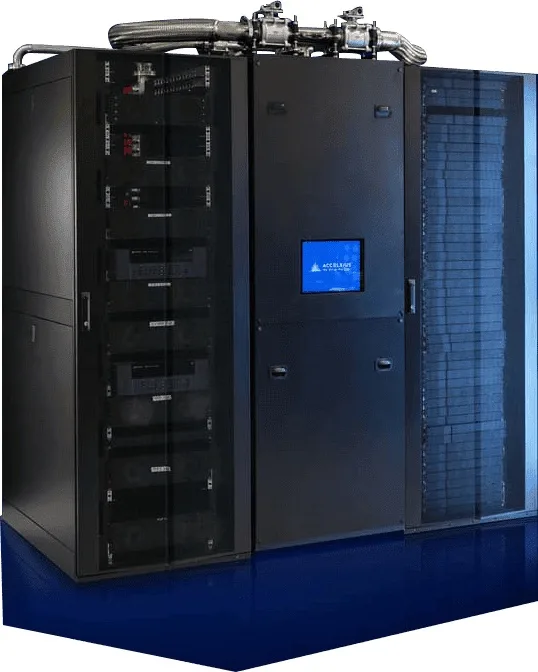
AI and GPU workloads pack far more power and heat into each rack than traditional IT, often beyond what air cooling alone can remove. Air cooling, enhanced with containment and in-row units, still works up to moderate densities, but the highest-density AI racks increasingly require liquid cooling, either direct-to-chip cold plates or full immersion, to remove heat effectively. Most facilities will run a hybrid of air and liquid as they scale into AI.
What We Provide
Related Solutions
High-Density Cooling Design
We design containment, in-row, rear-door, and liquid cooling for AI and GPU rack densities.
Learn moreLiquid Cooling and CDUs
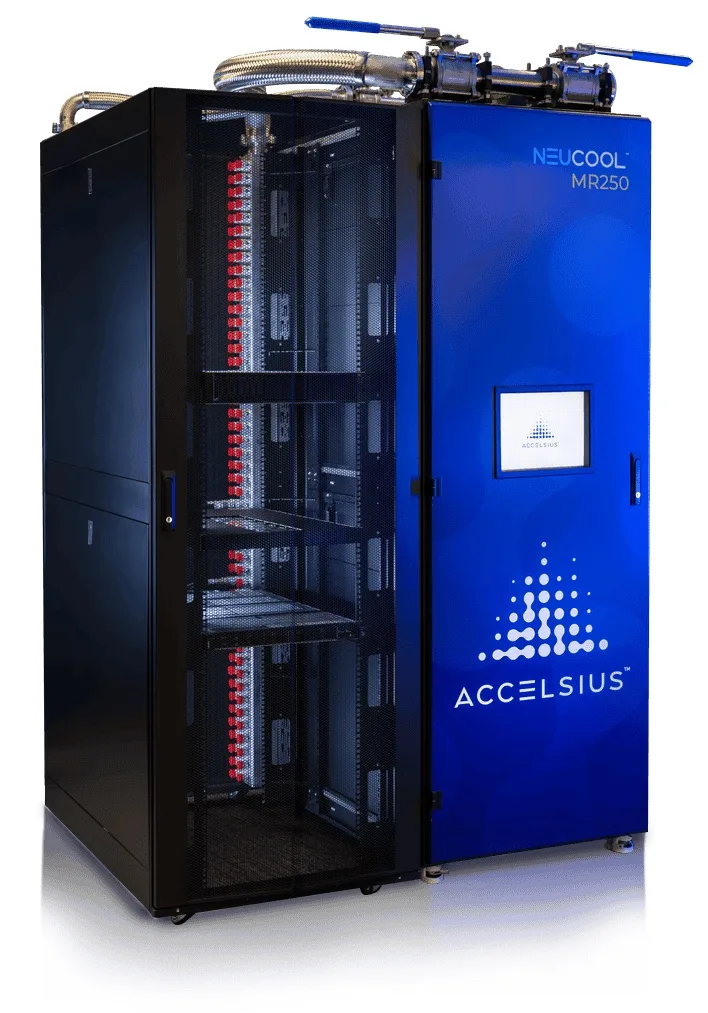
We design and integrate direct-to-chip liquid cooling and coolant distribution units for the densest racks.
Learn morePower for AI Loads
We design the high-density power and UPS architecture AI clusters require alongside the cooling.
Learn morePlan for the Heat
AI Densities Are Outpacing Air Cooling
Traditional racks ran a few kW; AI and GPU racks can run many times that, concentrating heat that air struggles to remove. Containment and in-row cooling extend air's reach, but the densest racks need liquid cooling at the chip or via immersion.
Comp-Utility designs a cooling and power strategy that handles your AI densities today and scales as they climb.
The Comp-Utility Difference
Why Comp-Utility?
Engineer-Owned and Operated
Comp-Utility is owned and operated by engineers, with licensed Texas Professional Engineers (P.E.) on staff. That rigor anchors every design, specification, and installation.
Long-Standing Distribution Partner
As a long-standing distribution partner of Eaton, Schneider Electric, and Vertiv, we specify best-in-class systems and back them with factory-grade service.
Trusted Since 1992
We have designed, installed, and maintained mission-critical power and cooling infrastructure across Central Texas since 1992, through every generation of the technology.
Turnkey, Single-Contract Partner
We sell, design, install, and maintain complete infrastructure end to end. One accountable team and one contract for power, cooling, distribution, and cabling.
Licensed, Certified & Recognized
We hold ourselves to the standards of the institutions we serve, from professional licensure and jobsite safety to the industry organizations that set the bar for mission-critical work.

Licensed Professional Engineers
State of Texas (TBPE)
OSHA 30 Certified
Field Technicians

AFCOM Member
Data center industry association

7x24 Exchange Member
Mission-critical infrastructure
Frequently Asked Questions
Why is cooling AI and GPU data centers so challenging?
AI and GPU servers draw far more power and generate far more heat per rack than traditional IT, sometimes several times as much. Concentrating that heat in a small space exceeds what perimeter air cooling can remove, creating hot spots and thermal risk. Effective AI cooling requires bringing cooling much closer to the heat, often with liquid.
Can air cooling handle AI workloads?
Air cooling, enhanced with hot-aisle or cold-aisle containment and in-row units, can handle moderate increases in density, but there is a practical ceiling. As AI rack densities climb into the tens of kilowatts and beyond, air alone cannot remove the heat effectively, and liquid cooling becomes necessary for the densest racks.
What is direct-to-chip liquid cooling?
Direct-to-chip (cold plate) liquid cooling circulates coolant through plates mounted directly on processors and GPUs, removing heat at the source far more effectively than air. It typically uses a coolant distribution unit (CDU) to manage the loop. It is a leading approach for high-density AI racks and can be deployed alongside air cooling for the rest of the load.
What is immersion cooling?
Immersion cooling submerges servers in a dielectric (non-conductive) fluid that absorbs heat directly, removing the need for fans and air handling. It can support very high densities and high efficiency but requires different infrastructure and handling. Immersion is one option for extreme-density deployments; direct-to-chip is currently more common for retrofits.
Will I need both air and liquid cooling?
Most facilities scaling into AI will run a hybrid: liquid cooling for the densest AI and GPU racks and air cooling (with containment and in-row units) for the remaining load. Designing for hybrid operation lets you adopt liquid where it is needed without converting the entire floor. Comp-Utility designs integrated hybrid cooling strategies.
What is a CDU?
A coolant distribution unit (CDU) manages the liquid cooling loop, transferring heat from the technology coolant (serving cold plates or rear doors) to the facility water or air, while controlling flow, temperature, and pressure. CDUs are central to direct-to-chip deployments. Comp-Utility integrates CDUs as part of a liquid cooling design.
How does AI cooling affect power infrastructure?
AI's high rack densities also drive high-density power distribution and larger UPS and generator capacity, so cooling and power must be designed together. The power architecture, including high-density PDUs and large UPS systems, has to match the cooling strategy. Comp-Utility designs both the cooling and the power for AI deployments as one coordinated system.
Who can design AI data center cooling in Central Texas?
Comp-Utility designs and installs air, hybrid, and liquid cooling for AI and GPU data centers across Central Texas, along with the matching high-density power infrastructure, and maintains it with 24/7 response. Call (512) 346-0999 or email sales@comp-utility.com to plan an AI-ready cooling design.