Open vs Closed Transition ATS: Which Do You Need?
An automatic transfer switch (ATS) moves the load between utility and generator power. Open-transition (break-before-make) briefly disconnects before connecting the new source, causing a momentary interruption that a UPS rides through. Closed-transition (make-before-break) briefly parallels both sources for a seamless transfer with no interruption, useful for return-to-utility transfers, but it requires utility coordination. The right type depends on whether brief breaks are acceptable and on utility requirements.
What We Provide
Related Solutions
ATS Selection and Service
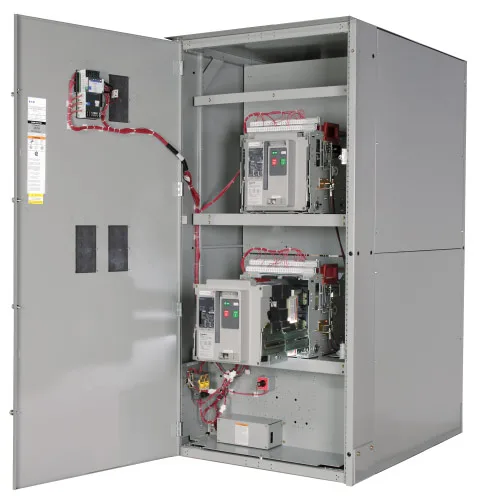
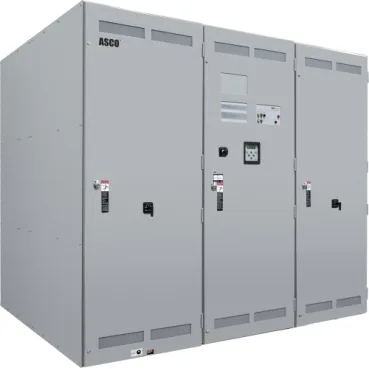
We specify, install, and service open- and closed-transition transfer switches across major brands.
Learn moreTransfer Testing
We perform NFPA 110 transfer testing so the handoff between sources works automatically and safely.
Learn moreSwitchgear and Paralleling
We design transfer and paralleling switchgear for seamless, redundant source transfer.
Learn moreBreak or No Break
Decide Whether a Momentary Interruption Is Acceptable
If a UPS already protects the critical load, an open-transition ATS is simpler and lower cost, since the UPS covers the brief transfer gap. If you need to transfer without any interruption, including testing or returning to utility without disturbing loads, closed transition is the answer.
Comp-Utility evaluates your loads, UPS coverage, and utility requirements to specify the right transfer scheme.
The Comp-Utility Difference
Why Comp-Utility?
Engineer-Owned and Operated
Comp-Utility is owned and operated by engineers, with licensed Texas Professional Engineers (P.E.) on staff. That rigor anchors every design, specification, and installation.
Long-Standing Distribution Partner
As a long-standing distribution partner of Eaton, Schneider Electric, and Vertiv, we specify best-in-class systems and back them with factory-grade service.
Trusted Since 1992
We have designed, installed, and maintained mission-critical power and cooling infrastructure across Central Texas since 1992, through every generation of the technology.
24/7 Emergency Response and Preventative Maintenance
Our technicians provide preventative maintenance programs and 24/7 emergency response, with rapid on-site dispatch across Central Texas when facilities need us most.
Licensed, Certified & Recognized
We hold ourselves to the standards of the institutions we serve, from professional licensure and jobsite safety to the industry organizations that set the bar for mission-critical work.

Licensed Professional Engineers
State of Texas (TBPE)
OSHA 30 Certified
Field Technicians

AFCOM Member
Data center industry association

7x24 Exchange Member
Mission-critical infrastructure
Frequently Asked Questions
What is an open-transition transfer switch?
An open-transition (break-before-make) ATS disconnects from one source before connecting to the other, creating a brief interruption, typically a fraction of a second to a few seconds, during transfer. This is acceptable for loads that tolerate a momentary break or are protected by a UPS that rides through the gap. It is the simpler, lower-cost transfer type.
What is a closed-transition transfer switch?
A closed-transition (make-before-break) ATS briefly connects both sources in parallel during transfer so the load never sees an interruption. This enables seamless transfers, including returning to utility power after a test or outage without disturbing loads. It requires synchronization and utility coordination because it momentarily parallels with the grid.
Which transfer type do I need?
If your critical loads are protected by a UPS that covers the brief gap, an open-transition ATS is usually sufficient and more economical. If you must transfer without any interruption, for example to avoid disturbing sensitive non-UPS loads or to test and return seamlessly, choose closed transition. Comp-Utility recommends based on your loads and utility rules.
Why does closed transition require utility coordination?
Because closed transition momentarily parallels the generator with the utility grid, the utility may require approval, protective relaying, and specific controls to ensure the brief parallel operation is safe and does not back-feed the grid improperly. Comp-Utility designs the protection and coordinates with the utility so closed-transition operation meets requirements.
Does a UPS make open transition acceptable?
Yes, in most cases. A UPS supplies the critical load through the momentary gap of an open transition, so the load experiences no interruption even though the ATS briefly breaks. This is why many data centers use open-transition ATS downstream of, or in coordination with, UPS protection, reserving closed transition for specific needs.
What is NFPA 110 transfer testing?
NFPA 110 is the standard for emergency and standby power systems. Transfer testing verifies that on loss of normal power the generator starts and the ATS transfers the load within the required time, then retransfers and shuts down correctly when utility returns. Comp-Utility performs and documents this testing for compliance and reliability.
Can you retrofit or upgrade an existing ATS?
Yes. We service, repair, and upgrade existing transfer switches, including converting or supplementing schemes where requirements change. We also troubleshoot ATS that fail to transfer. Comp-Utility assesses the existing equipment and recommends repair, upgrade, or replacement based on condition and your transfer requirements.
Who can specify and service an ATS in Central Texas?
Comp-Utility specifies, installs, tests, and services open- and closed-transition automatic transfer switches across major brands throughout Central Texas, including NFPA 110 transfer testing and 24/7 emergency response. Call (512) 346-0999 or email sales@comp-utility.com.